Asking, “How often should commercial AC systems be serviced?” Learn when to schedule maintenance and why regular commercial AC service matters.
Most commercial AC systems should receive professional maintenance at least once a year, with pre-season service before periods of heavy cooling demand. However, some commercial systems may need more frequent attention based on equipment type, operating hours, building conditions, and system usage.
For businesses in Orlando and Central Florida, commercial air conditioning systems often work hard for much of the year. Having a regular maintenance schedule can help identify developing problems, maintain reliable cooling, and reduce the risk of an unexpected breakdown.
What Should a Commercial AC Maintenance Schedule Look Like?
No single commercial AC maintenance schedule works for every business. The right frequency depends on the system, facility, and how heavily the equipment is used.
At a minimum, businesses should plan for a professional inspection and tune-up each year. Some commercial properties may benefit from semiannual or more frequent service, particularly when AC systems operate for extended hours or serve facilities with demanding cooling requirements.
ENERGY STAR recommends regular HVAC maintenance and notes that annual maintenance contracts can provide pre-season tune-ups before cooling and heating seasons. Routine operation and maintenance can also help lower the risk of early equipment failure and unexpected downtime.
Why Might a Commercial AC Need More Frequent Service?
Commercial AC systems can operate under significantly different conditions from one business to another. A system cooling a small office during standard business hours may have different maintenance needs than equipment serving a busy restaurant, retail store, medical facility, or commercial space that operates around the clock.
Factors that can increase maintenance needs include:
- Extended operating hours
- Heavy cooling demand
- High occupancy
- Dust, grease, or airborne debris
- Older HVAC equipment
- Frequent temperature adjustments
- Previous repairs or performance problems
Florida’s heat and humidity can also place sustained demand on commercial cooling equipment. Businesses should consider both manufacturer recommendations and the actual conditions under which their systems operate when determining service frequency.
What Happens During Commercial AC Maintenance?
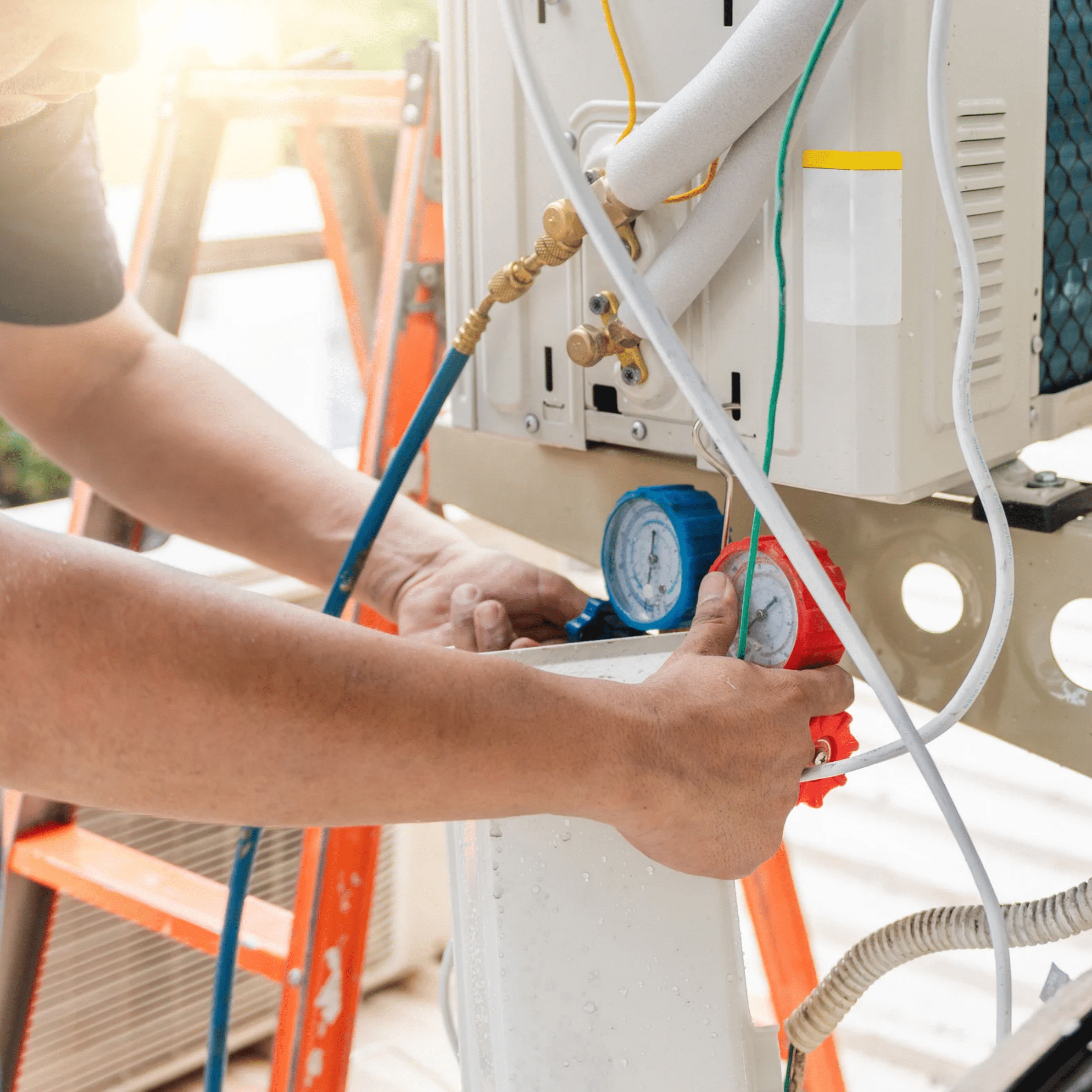
Professional maintenance allows a technician to inspect the system, evaluate performance, and identify components that may need attention before they cause a larger problem.
Depending on the equipment, commercial AC maintenance may include:
- Inspecting and replacing or cleaning filters
- Checking condenser and evaporator coils
- Inspecting electrical connections and components
- Checking condensate drains
- Evaluating airflow
- Inspecting belts, motors, and other moving components
- Checking thermostat and system controls
- Looking for refrigerant or water leaks
- Testing overall system operation
The exact maintenance requirements depend on the type of commercial HVAC equipment and its condition.
The U.S. Department of Energy notes that effective operation and maintenance of commercial HVAC equipment is important for maximizing efficiency, maintaining occupant comfort, and reducing equipment failures.
What Are the Benefits of Regular Commercial AC Service?
Preventive maintenance isn’t just about avoiding a complete AC failure. Regular service can help a commercial system operate more consistently throughout its lifespan.
A well-maintained system may provide benefits such as:
- More reliable cooling
- Improved energy efficiency
- Fewer unexpected breakdowns
- Longer equipment life
- More consistent indoor temperatures
- Earlier detection of worn or failing components
Routine maintenance also gives businesses a chance to address smaller concerns before they disrupt operations. The Department of Energy’s Better Buildings resources also highlight benefits of regular equipment maintenance, including improved performance, lower operating costs, longer equipment life, and a reduced risk of system failure.
Should You Wait Until Your Next Scheduled Service if Something Seems Wrong?
No. A maintenance schedule should provide routine preventive care, but it shouldn’t replace service when an AC system is already showing signs of trouble.
Contact a commercial HVAC professional if you notice:
- Inconsistent or rising indoor temperatures
- Weak airflow
- Unusual noises or odors
- Water leaking around the system
- Frequent cycling
- Higher energy use without an obvious explanation
- Equipment running continuously
- Unexpected system shutdowns
Waiting for the next scheduled maintenance visit can allow an existing problem to worsen. If your system isn’t operating normally, an early inspection can help prevent a minor issue from becoming a larger repair.
Keep Your Commercial AC on a Regular Maintenance Schedule
If you’re still asking, “How often should commercial AC systems be serviced?” the best schedule depends on your equipment and how your business uses it. Annual professional maintenance provides a useful baseline, while heavily used commercial systems may benefit from more frequent service.
All Temp AC and Refrigeration provides commercial air conditioning services for businesses throughout Orlando and Central Florida. Regular preventive maintenance helps keep your equipment running reliably and catch potential problems before they disrupt your business.
Contact us today to schedule commercial AC service and keep your system ready for Florida’s cooling demands.